Sustainability
Sustainable Packaging Compliance in 2026: PPWR, EPR and What Buyers Must Document
What the EU Packaging and Packaging Waste Regulation actually requires from importers, and the documents to demand from your supplier.
Compliance Team9 min read
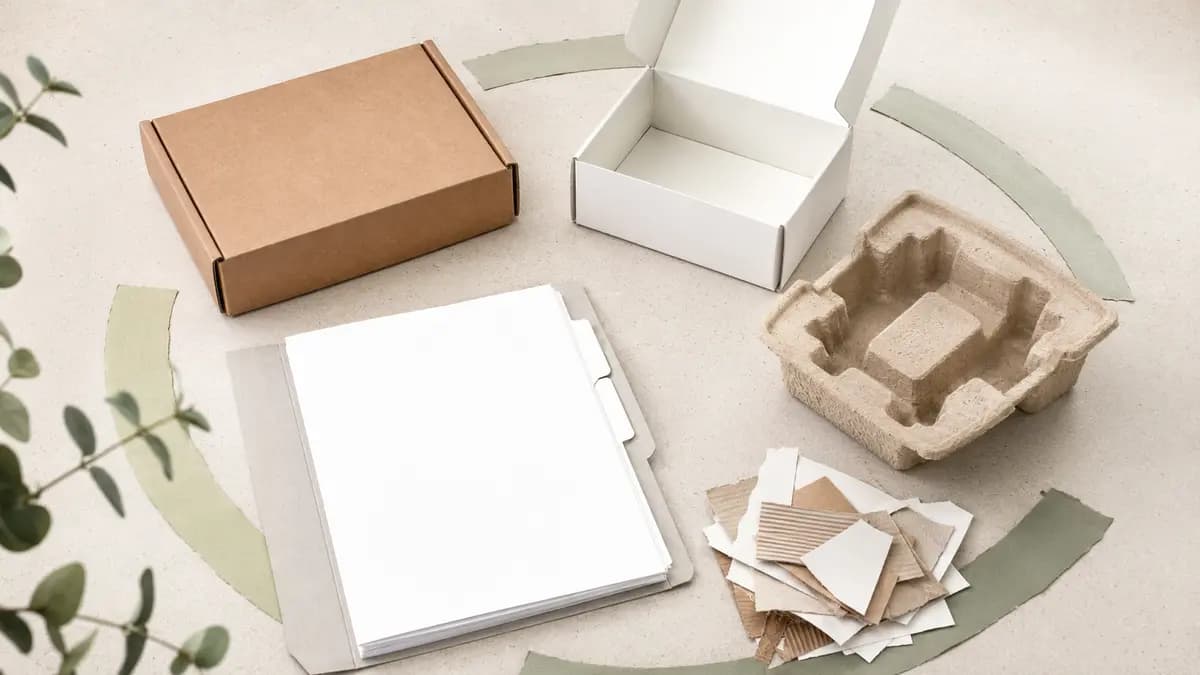
Packaging sustainability moved from marketing claim to legal obligation. If you import into the EU or UK, your packaging now needs documentation, not adjectives.
This article covers what is being asked for in practice, and the specific artefacts to require from any packaging supplier before you place an order.
Recyclability is now assessed by design, not intention
Regulators assess whether packaging can be recycled in existing infrastructure at scale — not whether it is theoretically recyclable. A paper box with plastic film lamination usually fails that test even though both materials are individually recyclable.
The practical consequence is a shift to mono-material construction: paper board with water-based coating, paper ribbon instead of polyester, paper-based closures instead of plastic clips.
Documents to require from your supplier
Ask for these at quotation stage, not after production. A supplier who cannot produce them for a sample order will not produce them for a shipment.
- FSC or PEFC chain-of-custody certificate, valid and covering your order
- Recycled content percentage by weight, per component
- Material composition declaration listing every substance including coatings and adhesives
- Food-contact declaration of compliance where applicable (EU 1935/2004, FDA)
- PFAS-free statement for any grease-barrier board
- Recyclability assessment against the destination market's sorting infrastructure
The cost reality
Mono-material builds are not automatically more expensive. Removing lamination removes a process step; water-based coating costs less than film. Where cost does rise is in plastic-free protective inserts, since moulded pulp requires tooling that EVA cutting does not.
Across the programmes we have converted in the last two years, the typical net effect has been between a 3% saving and an 8% increase, with the increase concentrated in insert-heavy electronics and glassware packaging.
Where to start if you are behind
Audit your top ten SKUs by volume first — they carry most of your EPR fee exposure. Replace film lamination with water-based varnish, swap polyester ribbon for paper, and get FSC certification onto the board. Those three changes typically move a box from failing to passing recyclability screening without any structural redesign.